The Right Way to Use AI for Cold Email (Hint: It's Not What You Think)
Everyone's asking the same question about AI and cold email: "How do I use it to write more emails?"
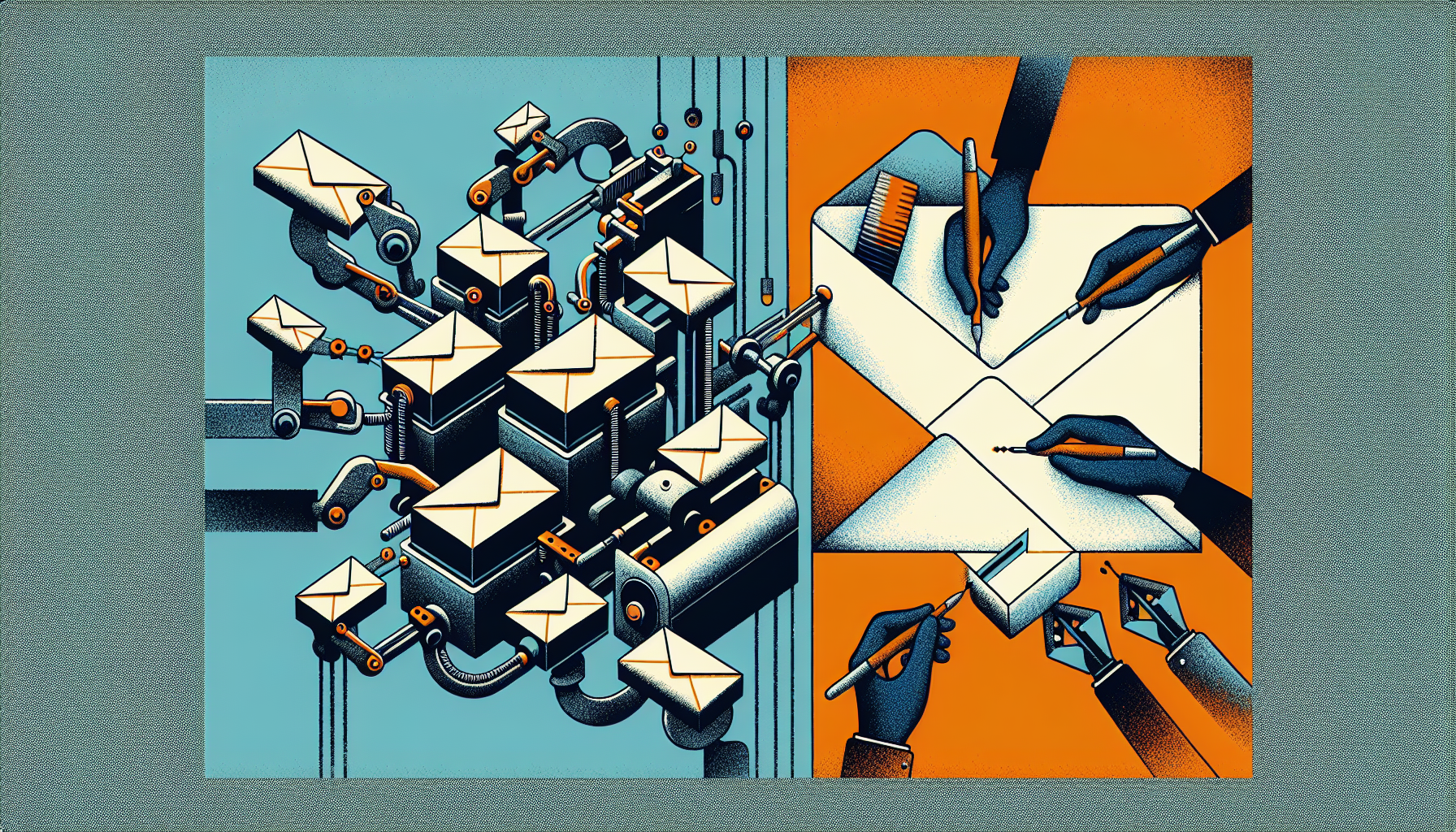
It's the wrong question.
The better question: "How do I use AI to sound less like everyone else?"
Here's what's happened. AI copywriting tools hit 78% adoption in 2025. By now, that number is closer to 90%. So if you're using AI the way most people do, you're not getting an edge. You're joining a chorus.
The average cold email reply rate sits between 1-4%. Top performers hit 10% or higher — two to four times better. The difference isn't that they're using AI. Everyone's using AI. The difference is how they're using it.
Most people have it backwards.
Should I use AI for cold email copy?
Let's get this out of the way: yes. If you're not, you're falling behind.
AI isn't optional anymore. It's table stakes. The tools are too good, too fast, too cheap to ignore. Anyone hand-crafting every email is spending time they don't have on work that doesn't need it.
But here's where people go wrong. They hear "use AI" and think the goal is to automate the writing. So they plug in a prompt, generate a batch of emails, and hit send. Maybe they swap in a first name or company name to make it feel "personalized."
Then they wonder why their reply rates look like everyone else's.
The question isn't whether to use AI. It's where. And that's where most people haven't done the thinking.
Why does most AI-written cold email fall flat?
Three reasons. They compound each other.
First: people use AI to write more instead of write better.
The promise of AI is efficiency. Efficiency is seductive. You can generate ten emails in the time it used to take to write one. So people do. They treat AI like a volume multiplier.
But cold email doesn't reward volume the way it used to. The data is clear: only 5% of senders personalize every email — yet they get two to three times better results. The problem isn't volume. It's forgettable emails.
When you use AI to scale mediocrity, all you get is more mediocrity. Faster.
Second: AI defaults to professional, not human.
This is a feature, not a bug — from the AI's perspective. Large language models train on vast amounts of formal, polished, corporate text. So when you ask AI to write a cold email, it gives you something that sounds like... a cold email.
Research from the ACM Web Science Conference found that GPT-4 emails were rated "most professional" by 56% of participants. Sounds good, right? Except those same emails were also rated "most unnecessarily wordy" by 82.9%.
Professional and wordy. That's what AI gives you by default. In a world where people scan their inbox for reasons to delete, wordy is death.
Worse: 85.4% of people surveyed could detect AI involvement before being told. The patterns are recognizable. The cadence is off. Something feels templated, even when it isn't technically a template.
Your recipients can smell it.
Third: people skip the thinking and jump straight to the writing.
This is the deepest problem. AI makes it worse.
A good cold email requires clarity: who you're writing to, why, and what you're offering. It requires thinking. AI makes it easy to skip that step. You can generate output without doing the input work.
But the thinking is the work. The writing is just the expression of it.
When you let AI write before you've done the strategic work, you're asking a machine to solve a problem you haven't defined. No wonder the output feels generic. It is generic. It has to be — you haven't given it anything specific to work with.
What does "sounding like yourself" even mean when AI is involved?
This is where things get interesting.
Some people hear "sound like yourself" and think it means avoiding AI entirely. Writing every email by hand. Keeping it "authentic."
That's not what I mean.
What I mean is this: the email could only have come from you. Your perspective, your phrasing, your point of view. Someone who knows you would read it and say, "That sounds like them."
Here's the thing — you can achieve that while using AI. You just have to be strategic about where you let AI in.
The insight most people miss:
Use AI for the parts of your email that benefit from research and precision. Keep AI out of the parts that carry your humanity.
Let me be specific.
Where AI belongs:
• Use cases and problem statements. AI excels at synthesizing company or industry information and identifying pain points. Let it research the prospect's situation and suggest why your solution might be relevant.
• Proof of homework. AI can scan a company's website, recent news, job postings, or LinkedIn activity and surface specific details that show you've done your research. Time-consuming work AI handles in seconds.
• Articulating fit. Once you understand the prospect's context, AI can help you articulate why you're reaching out, specifically and relevantly. Not "I help companies like yours" but "I noticed you're hiring three SDRs while your marketing team is still running on a single demand gen manager. That ratio usually creates a handoff problem."
Where AI doesn't belong:
• The greeting. "Hi Sarah" is fine. "Hey Sarah — hope your week's off to a good start" is better if it sounds like something you'd actually say. But "Dear Ms. Thompson, I hope this email finds you well" is AI-speak, and everyone knows it.
• The sign-off. This is where your personality shows. Are you formal? Casual? Do you use a simple "Best" or something more distinctive? Whatever it is, it should be yours.
• The call to action. This is the ask. It should feel direct, confident, human. AI tends to hedge with "If you have a moment, I'd love to chat" when what you need is clarity: "Open to a 15-minute call Thursday or Friday?"
• The P.S. line. If you use one, this is prime real estate for warmth. A genuine observation, a light touch of humor, a personal note. AI can't do this because it doesn't know what you would notice.
Most people have this backwards. They write the greeting and sign-off themselves (because those feel easy), then let AI generate the middle (because that feels hard). But the middle is exactly where AI adds the most value — and the bookends are where your voice matters most.
Flip it.
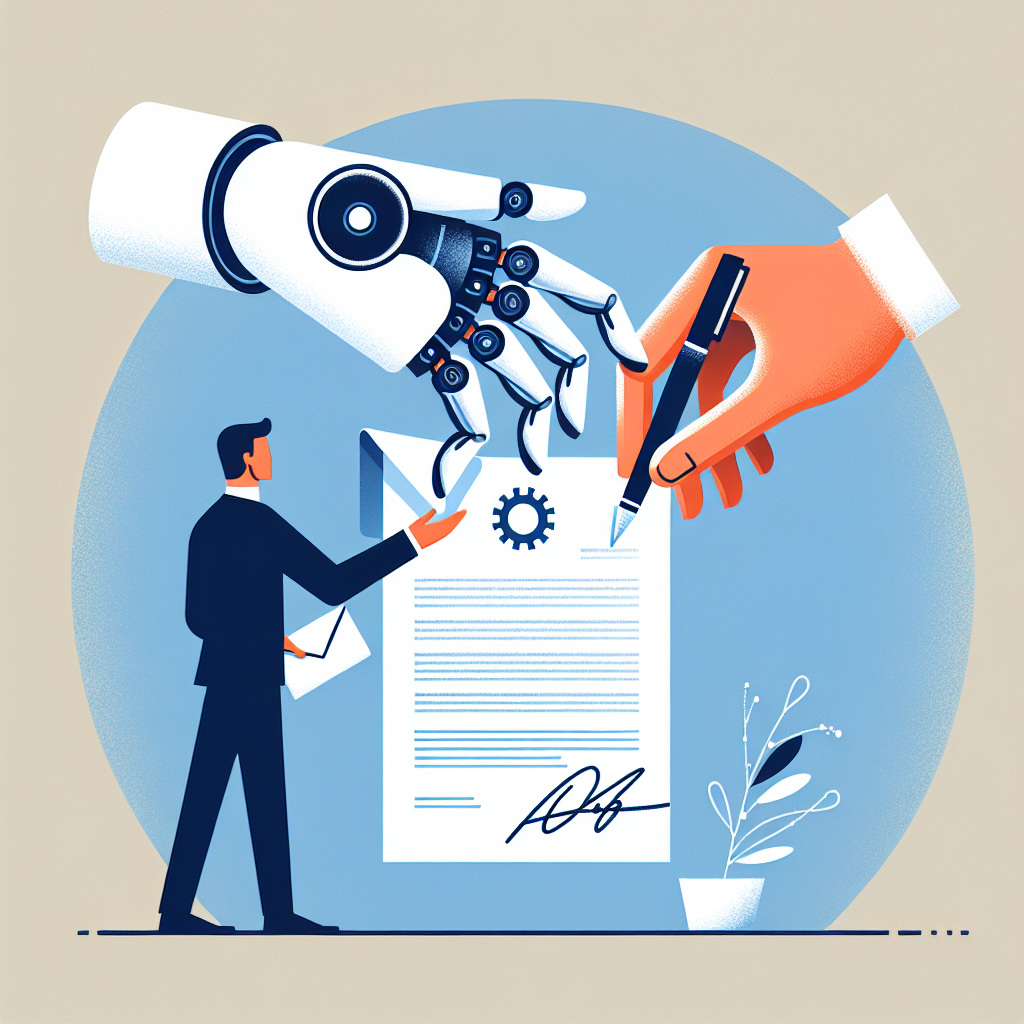
How do I use AI without losing my voice?
Think of it as a division of labor.
AI handles precision. You handle personality.
AI handles research. You handle relationship.
AI handles the what. You handle the how.
Here's a practical framework:
Step 1: Do the strategic work first.
Before touching any AI tool, answer these questions:
• Who am I writing to, specifically? Not "marketing leaders" — this person, at this company, in this situation.
• Why am I reaching out now? What's the trigger? What's happening in their world that makes this relevant?
• What's the one thing I want them to understand? Not your full value prop — the single idea that earns a reply.
If you can't answer these clearly, AI can't help you. It can only generate vague output from vague input.
Step 2: Use AI as a research assistant.
Let AI do the homework. Feed it the prospect's LinkedIn, company website, recent news. Ask it to identify:
• Likely pain points based on their role and situation
• Specific details that show you've done research
• Potential use cases for your solution that would be relevant
This is where AI shines. It processes information faster than you and spots patterns you might miss.
Step 3: Draft the middle yourself — or let AI draft it, then rewrite heavily.
Take the research AI surfaced and write the core of your email. This is where you articulate why you're reaching out and why it matters to them.
If you let AI draft this section, don't use it as-is. Rewrite it until it sounds like you. Cut the filler. Make it specific. Remove anything that feels like a template.
Step 4: Write the human parts yourself. Every time.
Greeting. Sign-off. CTA. P.S. These are yours. Don't outsource them.
This is where the research on AI detection matters most. People can tell when something is AI-generated. The tone is off. The warmth is missing. By keeping the human parts human, you inoculate the rest of the email against that suspicion.
Step 5: Read it out loud.
Old advice, but it matters more now than ever. If it doesn't sound like something you'd say in a conversation, rewrite it until it does.
AI tends toward formality. Counteract it.
What should I actually be optimizing for?
This is the question underneath all the other questions. It's where I want to leave you thinking.
The default answer in cold email has always been volume. Send more, get more. It's a numbers game.
AI made that answer even more tempting. Now you can send way more, way faster. So people do.
But here's what the data shows: elite cold email teams in 2026 aren't optimizing for volume. They're running "intelligence-led outbound." They're optimizing for precision.
So what should you be optimizing for?
Resonance, not reach.
One reply from the right person beats a hundred opens from the wrong ones. The goal isn't to be in more inboxes. It's to be welcomed in the right ones.
This means being more selective about who you contact, more thoughtful about why, more intentional about how. AI can help with all of this — but only if you're pointed in the right direction.
Distinctiveness, not sameness.
In a world where everyone can generate "good" copy, good isn't good enough. 78% of the industry uses the same tools, often with the same prompts. The output converges toward a mean.
Your edge isn't in generating what everyone else can generate. Your edge is in sounding like no one else sounds. That requires a point of view, a voice, and a willingness to not polish everything into corporate blandness.
Trust, not tricks.
The goal of a cold email isn't to trick someone into replying. It's to earn the conversation.
That means honesty about why you're reaching out, making it easy to say no if it's not a fit, and respecting their time. AI can help you be more relevant and specific. It can't make you trustworthy. That part's on you.
Fit, not volume.
The real job of a cold email is to articulate why you belong in someone's inbox. Not why your product is great — why it's great for them, right now.
AI can help you find that fit — research the prospect, identify pain points, surface details that prove you've done your homework. But you have to do the thinking first. And not send the email if the fit isn't there.

The question you should be asking
Everyone's asking, "How do I use AI to write more cold emails?"
But that question leads nowhere interesting. It leads to more emails that sound like everyone else's, sent to people already drowning in emails like that.
The better question: "How do I use AI to sound less like everyone else?"
The answer: use AI where it adds precision, not polish. Let it do the research, find the fit, articulate the relevance. Keep it away from the parts that carry your warmth, your voice, your humanity.
The tools are the same for everyone. How you use them is what sets you apart.
So maybe the real question isn't about AI at all. Maybe it's this:
What would you say if you could only send one email to this person, and it had to sound exactly like you?
Start there. Then figure out where AI can help.
Frequently Asked Questions
Yes—AI is table stakes now. But the question is not whether to use it, it is where. Use AI for research and personalization, not for the parts that carry your warmth and voice.
Three reasons: people use AI for volume instead of quality, AI defaults to professional-sounding (but wordy) language, and people skip the strategic thinking that makes emails relevant. The result is forgettable emails that sound like everyone else's.
The greeting, sign-off, call to action, and P.S. line. These are where your humanity shines through. Let AI handle research-based elements like use cases, problem statements, and proof of homework.
Think of AI as a research assistant, not a ghostwriter. Let it do the homework—scan prospects, surface pain points, articulate fit. Then write the warm, human parts yourself. Division of labor: AI handles precision, you handle personality.
Resonance over reach, distinctiveness over sameness, trust over tricks, and fit over volume. One reply from the right person beats a hundred opens from the wrong ones.